How to Choose the Right Insulin Syringe (Gauge, Length & Capacity, Compared)

Choosing among insulin syringes requires more than selecting the lowest available price. Capacity, gauge, needle length, unit markings, packaging, and disposal requirements all influence whether a syringe is appropriate for your prescribed insulin regimen.

At Budget Medical Supply, we understand that individuals, caregivers, and healthcare professionals require dependable diabetic supplies with clear specifications and reliable fulfillment. This guide explains the primary factors to evaluate before purchasing insulin syringes. It is educational in nature and does not replace the instructions of your prescriber, pharmacist, or diabetes educator.

1. Confirm the Insulin Concentration Before Purchasing

1.1 Match the syringe to the insulin

The information in this article primarily applies to U-100 insulin, which contains 100 units per milliliter. A U-100 vial should be used with a syringe calibrated for U-100 insulin.

Using an incorrect concentration or syringe calibration can create a serious dosing error. The American Diabetes Association explains the importance of matching insulin concentration and syringe type.

Before ordering, verify:

  1. The insulin concentration, such as U-100.
  2. The prescribed dose in units.
  3. Whether your regimen uses a vial and syringe rather than an insulin pen.
  4. The required unit increments, particularly if you use half-unit doses.

If your insulin or dosing instructions have changed, confirm your syringe selection with your healthcare provider before placing an order.

2. Compare Insulin Syringe Capacity: 0.3 mL, 0.5 mL, and 1.0 mL

Capacity refers to the maximum amount of liquid the barrel can hold. For U-100 insulin, the common conversions are:

  • 0.3 mL = up to 30 units
  • 0.5 mL = up to 50 units
  • 1.0 mL = up to 100 units

As a general purchasing principle, select the smallest syringe that comfortably accommodates your largest prescribed dose. A smaller barrel can make the markings easier to see and may support more precise measurement for lower doses.

Comparison of insulin syringe barrel capacities in three sizes

2.1 Capacity comparison

Syringe capacity Maximum U-100 dose Common reason to choose it Primary consideration
0.3 mL Up to 30 units Lower doses or doses requiring fine measurement Typically offers excellent visibility for small doses
0.5 mL Up to 50 units Moderate doses Provides a practical balance between capacity and readability
1.0 mL Up to 100 units Larger doses Offers greater capacity, although markings may appear more compressed

2.2 Practical examples

  • A prescribed dose of 18 units may be easier to measure with a 0.3 mL syringe.
  • A prescribed dose of 40 units may require a 0.5 mL syringe.
  • A prescribed dose of 75 units generally requires a 1.0 mL syringe.

These examples are not dosing recommendations. Your largest prescribed dose, not an estimated average, should guide the capacity selection. If your doses vary significantly, ask your diabetes care team whether one syringe size is appropriate for all injections or whether different sizes are warranted.

3. Understand Gauge: 29G vs. 30G vs. 31G

Gauge describes the thickness of the needle. The numbering system can initially appear counterintuitive:

A higher gauge number indicates a thinner needle.

Therefore:

  • 29G is thicker than 30G and 31G.
  • 30G is thinner than 29G but thicker than 31G.
  • 31G is generally the thinnest of these three options.

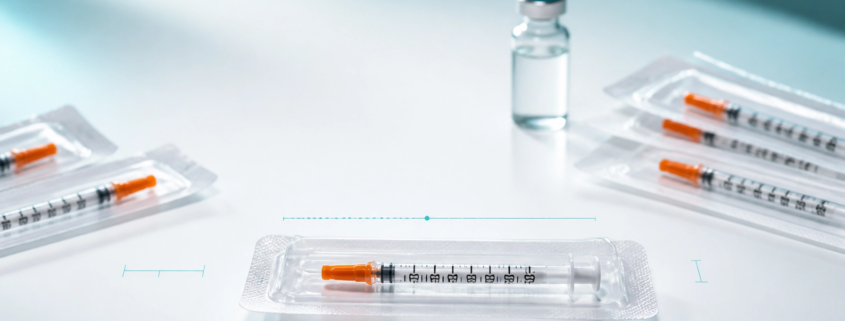
Insulin syringe needles shown in a clean gauge and length comparison

3.1 Gauge comparison

  1. 29G

    • Slightly thicker needle construction.
    • May provide a firmer feel during handling.
    • Can be considered when a particular insulin or regimen requires a thicker needle, subject to clinical guidance.
  2. 30G

    • A widely used middle-ground option.
    • Combines a relatively fine needle with practical handling characteristics.
  3. 31G

    • Thinner needle that many users select for comfort.
    • May be more delicate and require careful handling.

The American Diabetes Association notes that higher-gauge needles are thinner and may be associated with less discomfort, while lower-gauge needles may allow faster delivery for larger doses. Comfort, insulin viscosity, dose volume, and personal technique should all be considered.

Do not change gauge solely to address injection discomfort without discussing the change with your healthcare professional. A thinner needle is not automatically the correct choice for every person or regimen.

4. Select the Appropriate Needle Length

Insulin is generally delivered into the subcutaneous tissue beneath the skin. Needle length affects injection technique and the possibility of reaching muscle, particularly in lean individuals or at certain injection sites.

4.1 Short needles: approximately 4 mm or 5/16 inch

A 4 mm needle is commonly associated with insulin pen needles, while 5/16 inch equals approximately 8 mm and is a common short insulin syringe length.

Shorter options may:

  • Reduce the likelihood of reaching muscle for many adults.
  • Support a more comfortable injection experience.
  • Be suitable for a wide range of body types when recommended by a clinician.

Because 4 mm and 5/16-inch needles are not the same length, read the product specification carefully. Do not assume that “short” indicates a single standardized measurement.

4.2 Standard length: approximately 1/2 inch

A 1/2-inch needle, approximately 12.7 mm, is a traditional insulin syringe length. Some adults may use this length under the direction of their healthcare provider, particularly when it is already established in their injection routine.

Longer needles may require specific attention to injection angle, skin-fold technique, and injection site.

4.3 Longer length: approximately 5/8 inch

A 5/8-inch needle, approximately 16 mm, is longer than the sizes commonly selected for many modern subcutaneous insulin injections. It should not be chosen merely because it appears to provide greater reach.

Use a longer needle only when the product is specifically appropriate for your prescribed regimen and your healthcare professional has confirmed the length. Needle length should be individualized, especially for children, very lean adults, or people with a history of injecting into muscle.

5. Review Barrel Markings and Unit Precision

5.1 Units are not interchangeable with milliliters

A U-100 syringe is calibrated in insulin units. For U-100 insulin:

  • 100 units = 1.0 mL
  • 50 units = 0.5 mL
  • 30 units = 0.3 mL

Do not use a standard medication syringe marked only in milliliters to measure insulin unless specifically directed by a qualified professional. The calibration may not correspond to your prescribed dose.

5.2 Examine the smallest graduation

Syringes may feature:

  • Half-unit markings, useful for certain lower or finely adjusted doses.
  • One-unit markings, common for many routine doses.
  • Two-unit markings, more frequently found on some 1.0 mL syringes.

When comparing insulin syringes, verify the smallest increment printed on the barrel. If your prescribed dose requires half-unit precision, a syringe with only two-unit increments may not be suitable.

5.3 Read the plunger consistently

When measuring, align the top edge of the plunger gasket closest to the needle with the desired unit marking. Hold the syringe at eye level and use adequate lighting. If the markings are difficult to see, consult your pharmacist or diabetes educator rather than estimating.

6. Store Insulin Syringes and Insulin Correctly

Insulin syringes and insulin have different storage requirements.

6.1 Syringe storage

Keep unused insulin syringes:

  1. In their original sterile packaging.
  2. In a clean, dry location.
  3. Away from excessive heat, moisture, dust, and direct sunlight.
  4. Out of reach of children and pets.

Do not use a syringe if the package is torn, wet, punctured, or otherwise compromised. Disposable insulin syringes should generally be used once and discarded unless your healthcare provider gives different written instructions.

6.2 Insulin storage

Insulin storage varies by product. Unopened insulin is often refrigerated within the temperature range specified by the manufacturer, while in-use insulin may be stored at room temperature for a limited period. These conditions differ by insulin type and brand.

Always follow the package insert and pharmacist’s instructions. Do not use insulin that has been frozen, exposed to excessive heat, or changed in appearance in a manner inconsistent with the product instructions.

7. Dispose of Used Insulin Syringes Safely

Used insulin syringes are sharps and require responsible handling.

7.1 Immediate disposal

After use:

  1. Place the entire syringe directly into an appropriate sharps container.
  2. Do not bend, break, or remove the needle by hand.
  3. Avoid recapping when you have immediate access to a sharps container.
  4. Never share a syringe or needle with another person.

The FDA recommends using a puncture-resistant, leak-resistant sharps disposal container. Keep the container upright and inaccessible to children and pets.

7.2 Closing and disposing of the container

Do not overfill a sharps container. Close and seal it when it reaches the marked fill line or approximately three-quarters full. Then follow your local health department, pharmacy, sanitation department, or community program instructions.

Never place loose needles or syringes in household trash, recycling bins, or toilets. Disposal requirements may vary by state or municipality, and unforeseen circumstances may affect available collection programs.

Portable insulin travel case containing syringes and diabetes supplies

8. Purchasing Insulin Syringes from Budget Medical Supply

Budget Medical Supply has served as a trusted medical-supply partner since 2001. We provide diabetic supplies and daily living products to individuals, caregivers, and healthcare professionals nationwide.

When reviewing our current medical supply selection, compare each insulin syringe listing by:

  1. U-100 compatibility
  2. Capacity
  3. Gauge
  4. Needle length
  5. Unit markings
  6. Quantity and packaging format
  7. Brand and product specifications

Depending on the product, you may find prepacked or bulk purchasing formats suited to personal use, caregiving responsibilities, or clinical supply management. Availability, packaging, and product specifications may change without notice.

We support practical purchasing flexibility through Klarna and Affirm, subject to applicable approval and payment terms. We also provide expedited fulfillment through USPS and FedEx, although delivery timing may vary because of carrier schedules, weather, holidays, address limitations, or other circumstances beyond our control.

9. Final Selection Checklist

Before purchasing insulin syringes, confirm:

  • Your insulin concentration: Is it U-100?
  • Your maximum dose: Will the syringe capacity accommodate it?
  • Your gauge preference: Is 29G, 30G, or 31G appropriate?
  • Your needle length: Has your healthcare professional confirmed the length?
  • Your markings: Do the graduations support your prescribed dose?
  • Your quantity: Is a prepack or bulk format more practical?
  • Your disposal plan: Do you have an appropriate sharps container?
  • Your delivery needs: Have you allowed sufficient time for shipping?

We invite you to review Budget Medical Supply’s diabetic-care products and contact our team with questions about product specifications or ordering assistance. You may reach us at 888-827-4472, Monday through Friday from 9:00 a.m. to 5:00 p.m. Eastern Time and Saturday from 10:00 a.m. to 2:00 p.m. Eastern Time.

Select carefully. Verify the specifications. When in doubt, consult your healthcare professional before changing syringe capacity, gauge, or needle length.

7 Mistakes You’re Making with Your Diabetic Supplies (And How to Fix Them)

At Budget Medical Supply, we have served as a trusted partner in healthcare since 2001. We understand that managing diabetes is a comprehensive, lifelong commitment that requires precision, discipline, and the highest caliber of equipment. However, even the most diligent individuals can fall into routines that inadvertently compromise their health or the efficacy of their diabetic supplies.

The integrity of your medical regimen is paramount. When minor errors in handling or storage occur, they can lead to inaccurate glucose readings, increased risk of infection, or the degradation of life-sustaining medication. In the following sections, we outline the seven most frequent mistakes encountered in diabetic care and provide professional, actionable solutions to rectify them.

1. The Proclivity for Reusing Insulin Syringes and Lancets

A common, yet hazardous, practice is the multiple-use of single-use devices. While it may seem like a minor convenience or a cost-saving measure, the reuse of insulin syringes and lancets poses significant medical risks.

  • 1.1 Structural Integrity and Trauma: Manufacturers design these needles for a single insertion. After the initial use, the microscopic tip of the needle becomes dull and may even develop a "hook" shape. This degradation leads to increased tissue trauma, pain, and the potential development of lipohypertrophy (fatty lumps under the skin) which can impair insulin absorption.
  • 1.2 Infection Liability: Every time a needle punctures the skin or touches a surface, its sterility is compromised. Reusing these implements introduces bacteria directly into your subcutaneous tissue, significantly elevating the risk of localized infections or abscesses.

The Solution: Always utilize a fresh, sterile syringe or lancet for every single injection or finger prick. At Budget Medical Supply, we offer a vast inventory of high-quality insulin syringes to ensure you never have to compromise your safety.

2. Improper Storage and Environmental Exposure of Insulin

Insulin is a delicate biological protein that is highly sensitive to temperature fluctuations and light exposure. Failure to maintain the proper environment can render the medication inert.

  • 2.1 Temperature Extremes: Exposing insulin to direct sunlight or leaving it in a vehicle can cause it to lose potency rapidly. Conversely, allowing insulin to freeze is equally detrimental; frozen insulin must be discarded immediately, as the molecular structure is permanently altered.
  • 2.2 The Refrigeration Standard: Unopened vials and pens should ideally be stored in a refrigerator between 36°F and 46°F (2°C to 8°C). Once opened, many types of insulin may be kept at room temperature for a limited duration: typically 28 days: but must be kept away from heat sources.

The Solution: Implement a strict storage protocol. Use a dedicated thermometer for your medical refrigeration and utilize insulated travel cases when moving between locations.

An open portable insulin travel kit showcasing organized insulin vials and syringes for safe transport.

3. Neglecting Comprehensive Diabetic Foot Care

For individuals managing diabetes, foot health is not merely a matter of comfort; it is a critical component of preventing long-term complications. Peripheral neuropathy can mask injuries, leading to infections that are difficult to treat.

  • 3.1 Inadequate Foot Inspections: Failing to perform a daily visual inspection of your feet can allow minor abrasions, blisters, or redness to escalate into serious ulcers.
  • 3.2 Substandard Footwear: Wearing standard hosiery that is too tight can restrict circulation and create friction points.

The Solution: Incorporate a daily "foot check" into your evening routine. Furthermore, the transition to specialized diabetic socks is a necessary investment. These are designed with non-binding tops and seamless toes to minimize pressure and improve blood flow. You can find a premium selection of mobility aids and foot care products on our shop page.

Professional diabetic foot care essentials including white diabetic socks and specialized creams.

4. Suboptimal Sharps Disposal Procedures

The disposal of used needles and lancets is a matter of both personal safety and public liability. Improperly discarded sharps pose a risk to sanitation workers, family members, and the community.

  • 4.1 Regular Trash Disposal: Placing loose syringes in a standard refuse bin is a significant safety violation. Needles can easily puncture plastic bags and cause accidental needle-stick injuries to others.
  • 4.2 Using Fragile Containers: Utilizing thin plastic or glass containers for disposal is insufficient. These materials can be easily breached or shattered.

The Solution: Utilize an FDA-cleared sharps container or a heavy-duty, opaque plastic container (such as a laundry detergent bottle) with a secure, screw-on lid. Ensure you follow local regulations regarding the final disposal of these containers once they are three-quarters full.

5. Overlooking Expiration Dates and "Open-Date" Potency

Many patients rely on the official expiration date printed on the packaging of their diabetic supplies. While this date is critical, it is not the only timeline that must be monitored.

  • 5.1 The 28-Day Rule: Most insulin vials lose their required caliber of potency 28 to 30 days after the seal is broken, regardless of the expiration date on the box. Using insulin beyond this window can lead to unexplained hyperglycemia.
  • 5.2 Expired Test Strips: Using glucose test strips past their expiration date can result in inaccurate readings, leading to incorrect dosing decisions that could be life-threatening.

The Solution: Maintain a transparent record of when each vial or bottle is opened. Use a permanent marker to write the "Discard Date" directly on the label the moment the seal is compromised.

6. Inconsistent Glucose Monitoring and Calibration

Reliable data is the foundation of effective diabetes management. Inconsistent monitoring prevents you and your healthcare provider from identifying critical trends.

  • 6.1 Skipping Checks: Neglecting to monitor blood sugar during periods of illness, stress, or dietary changes can lead to dangerous fluctuations that go undetected.
  • 6.2 Ignoring Device Maintenance: Glucose monitors require occasional calibration and the use of control solutions to ensure the sensors are rendering accurate data.

The Solution: Establish a rigid schedule for monitoring as prescribed by your medical professional. Ensure your testing equipment is kept clean and that you are using compatible strips and lancets designated for your specific device.

7. Procurement Delays and Supply Chain Mismanagement

One of the most avoidable stressors in diabetic care is the realization that you are down to your final few insulin syringes or test strips without a replacement on hand.

  • 7.1 Reactive Ordering: Waiting until your supplies are nearly exhausted before reordering can lead to gaps in care due to unforeseen shipping delays or out-of-stock items.
  • 7.2 Financial Barriers: We recognize that the cost of premium healthcare can be a burden, which often leads to "stretching" supplies beyond their intended use.

The Solution: Adopt a proactive procurement strategy. At Budget Medical Supply, we have streamlined the process of purchasing medical supplies online. We offer expedited shipping via USPS and FedEx to ensure your essential tools arrive promptly. To further assist with your financial planning, we provide flexible payment options through Klarna and Affirm, allowing you to secure necessary supplies now and manage payments over time.

A professional medical shipping box illustrating expedited shipping and reliable supply chain management.

Conclusion: Your Partner in Accessible Healthcare

Correcting these seven common mistakes will significantly enhance the safety and efficacy of your daily diabetes management. Our mission at Budget Medical Supply is to provide the reliable, affordable equipment you need to maintain your well-being without compromise.

Whether you require a comprehensive range of diabetic supplies, mobility equipment, or daily living aids, our team is here to support you. Should you have any inquiries regarding our products, shipping timeframes, or payment procedures, we invite you to contact us directly.

Trust in our experience, benefit from our competitive pricing, and let us help you navigate your healthcare journey with confidence and clarity.

How to Save on Diabetic Supplies Without Sacrificing Quality (Easy Guide for Caregivers)

Managing the complexities of diabetes requires not only clinical diligence but also astute financial planning. For caregivers and individuals responsible for procuring diabetic supplies, the challenge lies in balancing the necessity for high-caliber equipment with the reality of recurring costs. At Budget Medical Supply, we have served as a trusted partner since 2001, dedicated to the mission of ensuring that premium healthcare remains accessible through affordable medical supplies.

This guide is designed to provide a comprehensive framework for caregivers to optimize their procurement strategies without compromising the safety or efficacy of the care rendered to their loved ones.

1.0 The Caregiver’s Foundation: Strategic Supply Management

The first step in achieving sustainable savings is the implementation of a structured inventory and procurement system. Transparency in consumption patterns allows for more precise purchasing, reducing the liability of expired or wasted resources.

1.1 Conduct a Comprehensive Supply Inventory

A meticulous review of your monthly requirements is essential. We recommend maintaining a detailed log of the following essentials:

  • Insulin delivery tools (Syringes and pen needles).
  • Glucose monitoring consumables (Test strips and lancets).
  • Supportive wear (Diabetic socks and compression gear).
  • Daily living aids (Alcohol swabs, glucose tablets, and carry cases).

By quantifying the exact volume of discount medical supplies utilized over a 90-day period, caregivers can transition from reactive, high-cost emergency purchases to planned, bulk procurement.

1.2 Optimize Insurance and Mail-Order Facilities

It is imperative to verify the "preferred" status of your supplies within your insurance provider’s formulary. Many insurance structures favor specific brands of meters and strips. Furthermore, leveraging mail-order services often unlocks significant discounts and the convenience of home delivery, mitigating the risk of supply gaps.

2.0 Strategic Procurement of Essential Consumables

When managing chronic conditions, the caliber of the tools used directly impacts patient outcomes. Selecting high-quality, affordable medical supplies does not require a compromise in safety.

2.1 Bulk Procurement of Insulin Syringes

Insulin syringes are a primary recurring expense. At Budget Medical Supply, we offer competitive pricing on a wide range of diabetic care products, including sterile insulin syringes. Buying in bulk is the most effective method to lower the unit cost while ensuring you always have a sterile supply on hand.

Organized insulin travel kit with vials and syringes

2.2 Selecting Quality Glucose Monitoring Equipment

While the cost of the monitor itself is often low, the recurring cost of test strips can be substantial. Caregivers should evaluate the long-term expenditure of the strip-and-meter ecosystem. We provide a curated selection of reliable monitoring tools designed for precision and fiscal efficiency.

3.0 Protective Wear and Mobility: The Role of Diabetic Socks

Proper foot care is a critical component of diabetes management, particularly for those at risk of neuropathy or circulatory complications. Investing in specialized foot care is a proactive measure that reduces the risk of more costly medical interventions later.

3.1 The Clinical Importance of Seamless Diabetic Socks

Generic hosiery often contains restrictive elastic bands and prominent seams that can lead to skin irritation or restricted blood flow. Professional-grade diabetic socks are engineered with:

  • Non-binding tops to facilitate healthy circulation.
  • Seamless construction to prevent friction and blisters.
  • Moisture-wicking fabrics to maintain a sterile and dry environment.

High-quality black diabetic crew socks

By purchasing multi-packs of specialized stockings, caregivers can provide the necessary protection while benefiting from volume-based savings.

4.0 Logistical Efficiency: Carry Cases and Organization

A central component of caregiving is the ability to manage supplies during travel or daily excursions. A high-quality carry case is not merely an accessory; it is a tool for logistical reliability.

4.1 Travel Kits and Supply Management

An organized carry case prevents the damage of sensitive equipment and ensures that all components, insulin, meters, and syringes, are stored in a temperature-controlled and secure manner. This prevents the financial loss associated with spoiled medication or lost supplies.

Dia-Pak insulin travel case for portable diabetes management

5.0 Financial Flexibility and Reliable Distribution

At Budget Medical Supply, we recognize that the financial burden of medical care can be significant. To support our community, we have implemented several measures to make procurement as seamless as possible.

5.1 Flexible Payment Options

To ensure that you do not have to delay essential purchases due to immediate budget constraints, we offer flexible payment solutions. You may choose to split your purchase into manageable installments via Klarna or Affirm. This allows caregivers to secure necessary diabetic supplies immediately while distributing the cost over time.

5.2 Expedited Logistics and Shipping

Timely access to medical supplies is non-negotiable. Our logistical network utilizes USPS and FedEx to ensure expedited shipping nationwide. Whether you are ordering aids to daily living or critical monitoring supplies, our streamlined fulfillment process is designed to minimize wait times.

Expedited medical supply logistics and delivery

6.0 Conclusion: Your Trusted Healthcare Partner

Navigating the landscape of affordable medical supplies requires a partner who understands the gravity of your responsibility as a caregiver. Since 2001, Budget Medical Supply has remained steadfast in our commitment to providing top-tier products at competitive price points.

We invite you to explore our comprehensive range of discount medical supplies and experience the reliability of a partner dedicated to your well-being. Should you require further assistance or have specific inquiries regarding our inventory or shipping protocols, our professional support team is available to assist you.

Contact Us Today:
For inquiries regarding bulk orders or product specifications, please visit our website or reach out to our customer service department. We are here to ensure your caregiving journey is supported by the best tools in the industry.


Professional Disclaimer: The information provided in this article is for educational purposes only and does not constitute medical advice. Always consult with a qualified healthcare professional before making changes to your diabetes management plan or switching medical equipment. Budget Medical Supply is not liable for any unforeseen circumstances arising from the misuse of products or information rendered herein.


Welcome To Budget Medical Supply

We have been your trusted partner since 2001 in providing top-quality medical supplies to meet the diverse needs of healthcare professionals and individuals alike. With a commitment to excellence, we are dedicated to enhancing the health and well-being of our customers by offering a comprehensive range of medical equipment and supplies.

Our mission is to empower healthcare providers, caregivers, and individuals to access the highest caliber of medical supplies. We believe that access to reliable and premium healthcare products is essential for improving the quality of life for our customers.